

By late summer, a lot of homeowners are looking at their lawn and wondering if it’s even worth trying to fix it before fall, thinking, “might as well wait until next season?” After weeks of heat and dry conditions, it’s easy to assume the lawn is a lost cause until next spring. But in many cases, this is actually one of the best times of year to take action!
If you’re researching seeding routines or searching for a lawn seeding company in Boston, late summer seeding can be one of the smartest ways to begin repairing damage and setting the lawn up for a much stronger recovery.
At Friends of Gardens, this is often the time of year when clients reach out because their lawn has clearly had enough. All sorts of ugliness tend to show up in mid-to-late summer: thin turf, bare spots, weeds, and stressed grass. The good news is that late summer and early fall often create an ideal window for improving lawn health when seeding is paired with proper soil preparation and a long-term maintenance plan.
Why Late Summer Can Be a Great Time to Seed
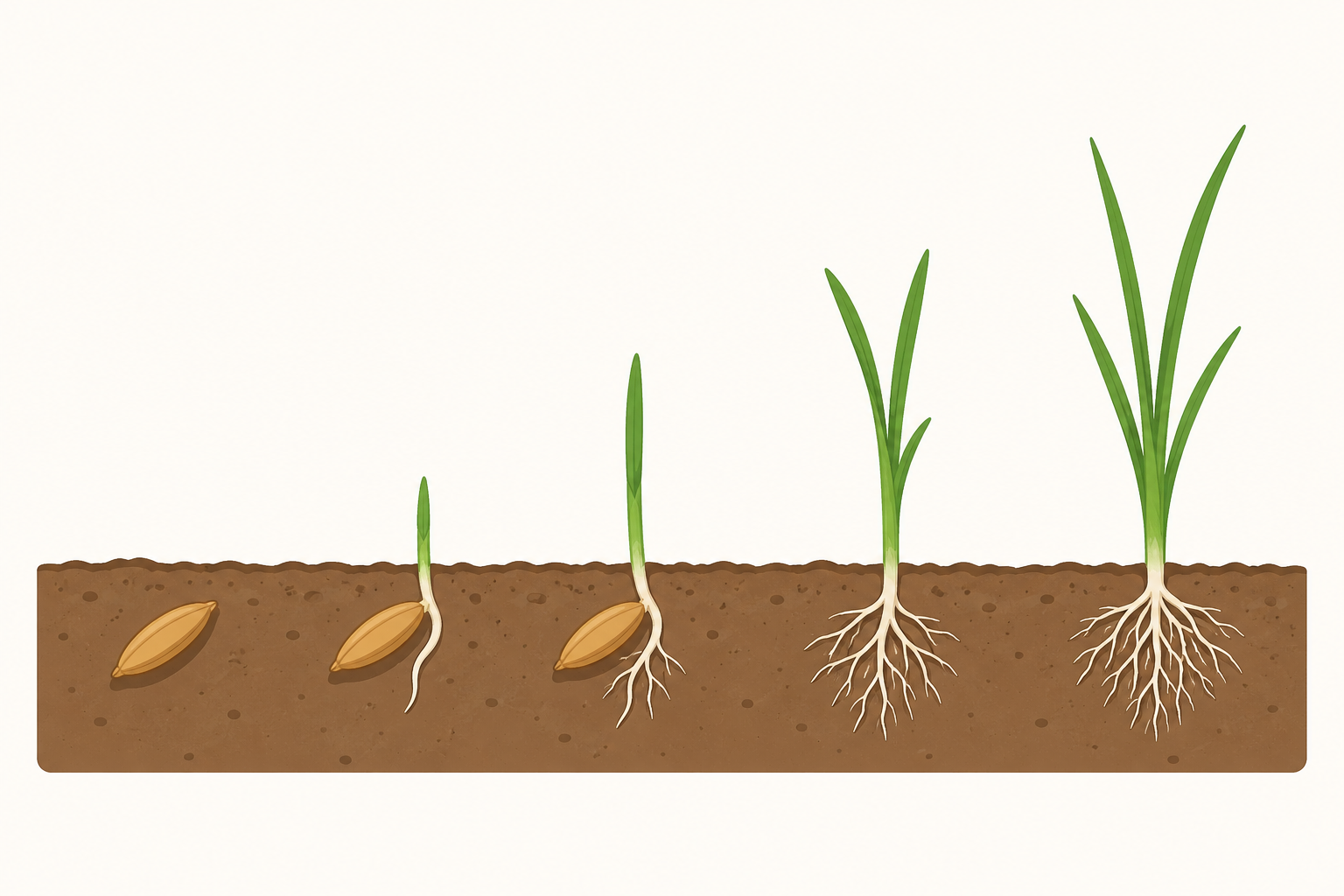
While spring usually gets most of the landscaping attention, late summer and early fall are some of the best times to repair and strengthen a lawn in Greater Boston. The soil is still warm from summer, which helps seed germinate more quickly, but the air temperatures are starting to cool enough to reduce stress on young grass. But we’re not yet entering the nights where freezing and frost are a problem. There’s also typically less weed pressure than in spring, which gives new seed a better chance to establish without competing as aggressively for space and nutrients.
Instead of waiting through another full cycle of winter and spring and hoping things improve, late summer seeding gives the lawn a chance to begin recovering now, while there’s still enough growing season left to establish healthier root systems.
When Seeding Is Worth It—and When It May Not Be Enough
Late-summer seeding is often a very good option for lawns that are thinning out, showing signs of stress, or struggling in isolated areas. If the turf is still present but weak, overseeding can help fill in sparse spots, improve density, and begin pushing the lawn back in the right direction. It’s especially useful when paired with aeration, soil improvement, and more consistent watering habits.
That said, not every lawn issue can be solved with seed alone. Some lawns face deeper problems, such as compacted soil, drainage issues, severe sun stress, or poor irrigation coverage. In those situations, seeding may still be part of the solution, but it may need to be combined with broader turf restoration work. Sometimes that means reworking soil conditions. Sometimes it means a more aggressive recovery plan. And in more damaged sections of the property, it may mean discussing whether sod installation is the faster, more reliable path to a usable lawn.
Lawn Seeding Company in Boston: The Lawn Has to Be Prepared Properly First
One of the biggest mistakes we see homeowners make with seeding is assuming they can just spread seed over stressed grass and hope for the best (fingers crossed!) But in reality, the success of late summer seeding depends heavily on what happens before the seed ever goes down. If the soil is compacted, if dead material is blocking contact, or if the area isn’t watered properly afterward, even the best seed won’t perform as it should.
That’s why the team at Friends of Gardens treats seeding as part of a bigger lawn recovery process. The team looks at what caused the decline in the first place, whether the lawn needs aeration, and whether watering practices need to change to support new growth.
In many cases, a lawn that looks “done for” is actually very recoverable, but only if the underlying issues are addressed along with the seeding itself!
Seeding Can Be the First Step in Bringing a Lawn Back to Life
Late summer seeding also allows homeowners to think more broadly about what the lawn and landscape need heading into fall. If the turf has struggled all season, the issue may not be just one bad month of weather. It may be a sign that the property needs more consistent residential landscape maintenance, a better irrigation strategy, healthier soil management, or a more realistic long-term lawn care plan.
For some properties, seeding is the right next step. For others, it becomes part of a bigger recovery plan. For homeowners looking for an experienced lawn-seeding company in Boston, late summer can be one of the best times to act rather than write off the lawn for the year.
We work with homeowners to evaluate whether seeding makes sense, what the lawn needs before it happens, and how to turn a worn-out, frustrating yard into one that feels healthy and usable!
Contact our team today.